

Jalal al-Din Balkhi
Mystic Poet, Scholar, and Spiritual Master
Jalal al-Din Muhammad Balkhi (1207–1273 CE), widely known as Rumi in the West, is one of the most celebrated poets and spiritual thinkers in world history. Born in the historic city of Balkh, in present-day Afghanistan, he is revered throughout the Persian-speaking world as Jalal al-Din Balkhi, honoring his birthplace and cultural roots. His poetry has inspired millions of people across cultures and generations with its profound messages of love, wisdom, unity, and spiritual transformation.
Jalal al-Din Balkhi was born in 1207 CE into a distinguished family of scholars and theologians. His father, Baha al-Din Walad, was a respected religious teacher and mystic. During Jalal al-Din’s childhood, political instability and the approaching Mongol invasions led the family to leave Balkh. After traveling through several important centers of learning, including Nishapur, Baghdad, and Mecca, the family eventually settled in Konya, a major cultural and intellectual center in Anatolia.
From an early age, Jalal al-Din received a comprehensive education in theology, jurisprudence, philosophy, literature, and the sciences. Following the death of his father, he became a respected scholar, jurist, and teacher. He was widely known for his mastery of Islamic law and religious scholarship and attracted many students seeking guidance.
A defining turning point in his life came in 1244 CE when he met the wandering mystic Shams al-Din Tabrizi. Their deep spiritual friendship transformed Jalal al-Din from a conventional religious scholar into a passionate poet and mystic. Inspired by this profound relationship, he began composing poetry of extraordinary emotional and spiritual depth, expressing the soul’s longing for divine love and truth.
Jalal al-Din’s literary legacy is among the richest in world literature. His major works include:
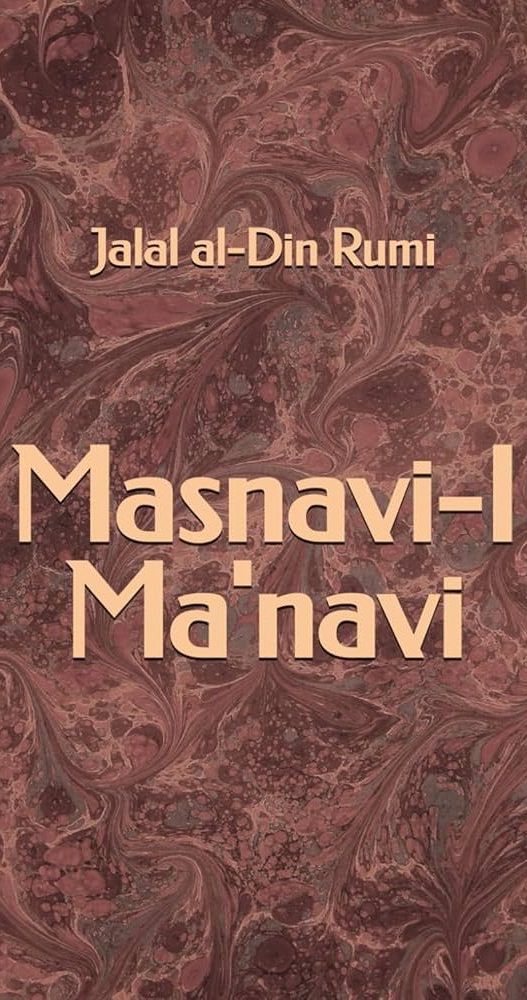
- The Masnavi-ye Ma’navi (Spiritual Couplets), a monumental six-volume masterpiece often described as one of the greatest works of mystical literature ever written.
- The Divan-e Shams-e Tabrizi, a collection of lyrical poems inspired by his relationship with Shams.
- Fihi Ma Fihi (It Is What It Is), a prose collection of teachings and discourses.
- Majalis-e Sab’a (Seven Sermons), reflecting his religious and ethical instruction.
The Masnavi contains stories, parables, and reflections that explore spiritual growth, moral responsibility, self-knowledge, and the relationship between humanity and the Divine. Written in elegant Persian verse, it combines literary brilliance with profound philosophical and ethical insight.
The central themes of Jalal al-Din Balkhi’s teachings include love, compassion, humility, tolerance, and the unity of existence. His poetry invites readers to look beyond outward differences and to discover the deeper spiritual reality that unites all people. His message emphasizes that love is a transformative force capable of overcoming division and bringing humanity closer to truth.
One of his most widely quoted teachings is:
“Come, come, whoever you are.”
This invitation reflects his inclusive vision and enduring appeal to people of all backgrounds and traditions.
Jalal al-Din’s followers later established the Mevlevi Order, known for the whirling dervish ceremony, a devotional practice symbolizing spiritual ascent and remembrance of the Divine. This tradition remains one of the most recognizable expressions of Islamic mysticism.
He died in Konya in 1273 CE. His passing is commemorated as Shab-e Arus, or “The Wedding Night,” symbolizing the soul’s union with the Divine. His mausoleum in Konya remains a major spiritual and cultural landmark visited by people from around the world.
Jalal al-Din Balkhi’s influence extends far beyond literature. His poetry has been translated into numerous languages and continues to inspire readers, scholars, artists, and spiritual seekers across every continent. His works are studied for their literary excellence, philosophical depth, and universal message of love and understanding.
Today, Jalal al-Din Balkhi is honored as one of the greatest poets and mystics of all time. His life and writings represent the highest achievements of Persian literature and spiritual thought. Rooted in the cultural heritage of Balkh and the broader Persian-speaking world, his legacy remains a timeless source of wisdom, compassion, and hope for humanity.